
Tailored systems
Solutions built around the real operation, with a focus on fit, reliability, and evolution.
Products, software, and applied engineering
Solinn first understands how the operation works and then defines the right path: a product, an integration, tailored software, or technical support. Applied technology to connect tools, reduce manual work, and make the operation more reliable.
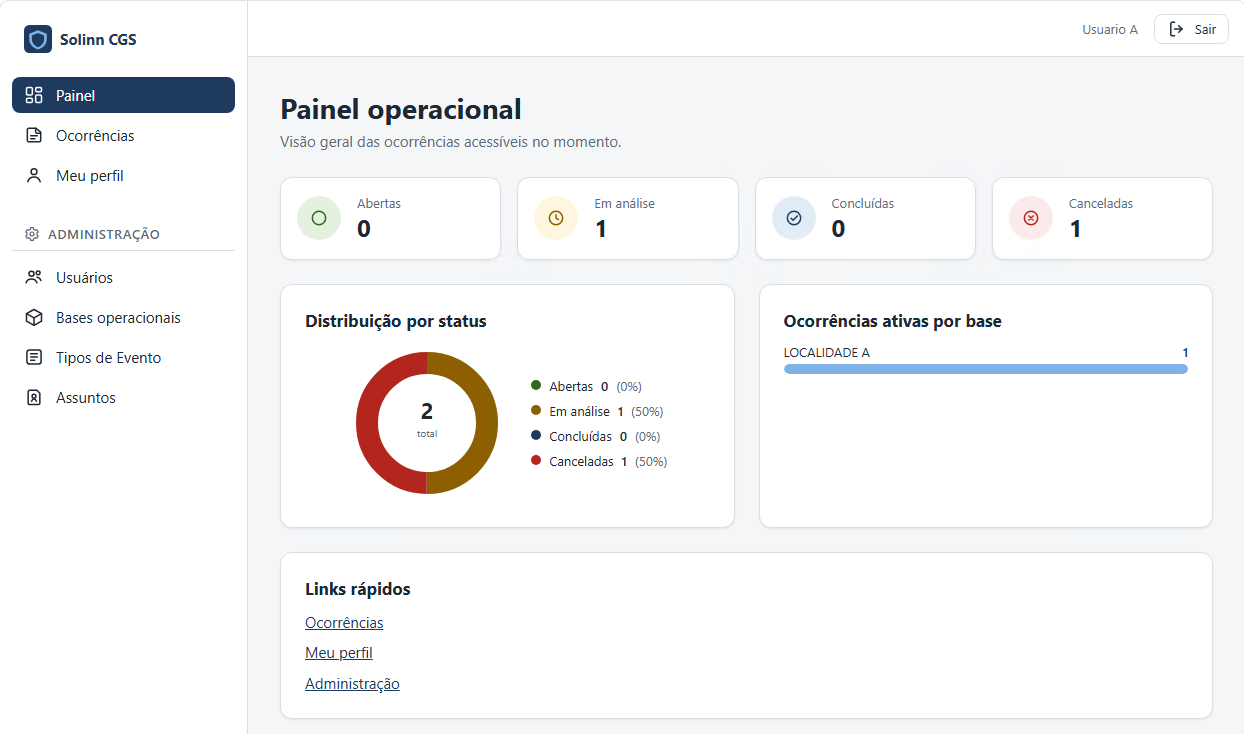
Now, one of those solutions takes the spotlight: CGS, built to centralize occurrences, organize follow-up, and provide greater operational visibility.
SOLINN PRODUCTS
Centralize records, responsible people, evidence, history, and operational follow-up in one structured place.
OTHER PRODUCT IN DEVELOPMENT
In development
SOLUTIONS FOR REAL OPERATIONS
Solinn also builds tailored systems, connects tools, and provides technical support for companies that need solutions shaped around their real context.
Solutions built around the real operation, with a focus on fit, reliability, and evolution.
Connect systems, data, and workflows to reduce rework and make operations more efficient.
Ongoing technical support for decisions, stability, reliability, and system evolution.
COMPANIES
Throughout our journey, we have supported organizations of different sizes and sectors, delivering software, integrations, and automation applied to real operations.
The first step is to identify the highest-value software move before turning it into development, integration, automation, or technical structuring.
We review the workflow, current systems, manual steps, data handoffs, and the operational outcome the business needs.
We identify whether the best first move is a system, integration, automation, dashboard, diagnosis, or narrower technical fix.
When execution is in scope, we shape the software, integration, API, or automation path with practical architecture and delivery boundaries.
As the operation changes, we help refine systems, extend integrations, reduce fragility, and keep the next step grounded.
A few practical questions teams usually ask before starting a diagnosis or advisory conversation.